Author: DJS

Ripped Recipe: Lemon Mint Ricecream and a rant against fructose and high-density ice cream

As the name implies, Lemon Mint Ricecream can be a calorie bomb

I deploy ricecream strategically for one or a combination of the two following reasons: 1) I’m totally burned out i.e. I’ve depleted most muscle and liver glycogen walking 20,000 steps while fasted or after having put in a particularly grueling lifting session, or 2) I’m mentally burned out and need a soul massage.

Ingredients
Cooked rice (with a little salt), cooled to room temp (whatever type and however much you want)
Vanilla ice cream
Juice of a quarter lemon
Chiffonade of several mint leaves
Cinnamon to taste

Preparation
Put rice in bowl. Mix with mint and lemon juice. Put vanilla ice cream on top. Sprinkle with cinnamon. Maybe let ice cream melt a little. Maybe mix ice cream and rice. Eat like a freaking wild animal then drink red wine then go right to bed.

Ice cream density is the devil

First, let me say that Ben and Jerry’s makes me angry. There’s no reason ice cream should be that rich. If you take a look at the weight of one serving (1/2 cup) of a “simple” Ben and Jerry’s flavor, like chocolate or vanilla, you’ll notice that it’s approximately 100 grams. Compare that to a less rich ice cream like Turkey Hill chocolate or vanilla, and you’ll see that the same 1/2 cup serving weighs around 60 grams. That means it’s less dense. Ok, fine, but that also translates into Turkey Hill containing about 60% the fat and 50% the sugar of the same volume of Ben and Jerry’s. Sure, you could eat only a quarter cup of B and J’s, but why the heck would a human want so little ice cream? I don’t know. This gets me all nice and hot for my next item, a rant against fructose.

Fructose is toxic

In my opinion fructose should be classified as a toxin and only be permitted to be used by a skilled practitioner who is well in tune with his or her body. Agave syrup should be banned outright, for it is 70% fructose, higher in fructose than any other substance other than pure fructose. You can hate me for despising agave syrup; I’m at peace with it. Based on my own research, I believe that fructose is so fantastically bad for the body for so many reasons. Yeah, sure it doesn’t elicit much of an insulin response (which is totally ironic), but for me, its number one offense is that the form of glycogen into which it’s converted by the liver cannot be stored in muscle which should be our primary carbohydrate storage tank (most people — at least Americans — eat way too much food, carry too little muscle, and don’t deplete their glycogen stores regularly enough for this mechanism to be effective, so they store most excess energy as fat). But I digress. I was saying that the form of glycogen into which fructose is converted can only be stored in the liver, which holds less glycogen than all the muscle in the body. As soon as the liver’s full of glycogen, which for the average, non-fasting, less active person it almost always is, that fructose is converted to triglycerides and stored as fat. Ever heard of high circulating triglycerides and how bad that is? Fructose, not saturated fat or cholesterol is one of the major contributors to the condition precisely because of way it is metabolized.

If I eat something with sugar (sucrose, which is half fructose by weight) in it, I make damn certain I’ve done everything I can to deplete my glycogen stores. That statement is a bit of a straw man; since I fast 21 hours every day and walk or lift or a combination of the two during my fast, it’s never an issue. This is yet another reason why fasting regularly for an extended period can be so incredibly powerful.

Want to Stop Being Fat? Want to Get Ripped? I have the secrets.

Secret 1: Stop eating.
Secret 2: Start walking.
Secret 3: Lift really heavy weights.

Six small meals a day is highly overrated. 2,500 calories in two hours right before bed is highly underrated.

The day I realized that the common wisdom of “six small meals a day” was keeping me from dropping below 10% body fat was the day I began an intermittent fasting routine. Lots of small meals keeps your insulin levels nice and your tummy steadily grumbling for more food. Since I started fasting nearly five months ago, I haven’t looked back. Now I fast for 21 hours straight every single day, and it’s easy. I swear. I’m not a freak of nature. I’m not a wizard. I’m not a wombat. I’ve never been leaner, never been stronger, and I’m still dropping fat AND gaining strength even in my current sub-7% state (albeit slowly) at a caloric deficit. If you search my blog for posts on intermittent fasting, you’ll find an explanation somewhere.

And I'm bloated in this photo from red wine and ice cream!

And I’m bloated in this photo from red wine and ice cream!

Walking is the king, queen and royal baby of “cardio”, hands down

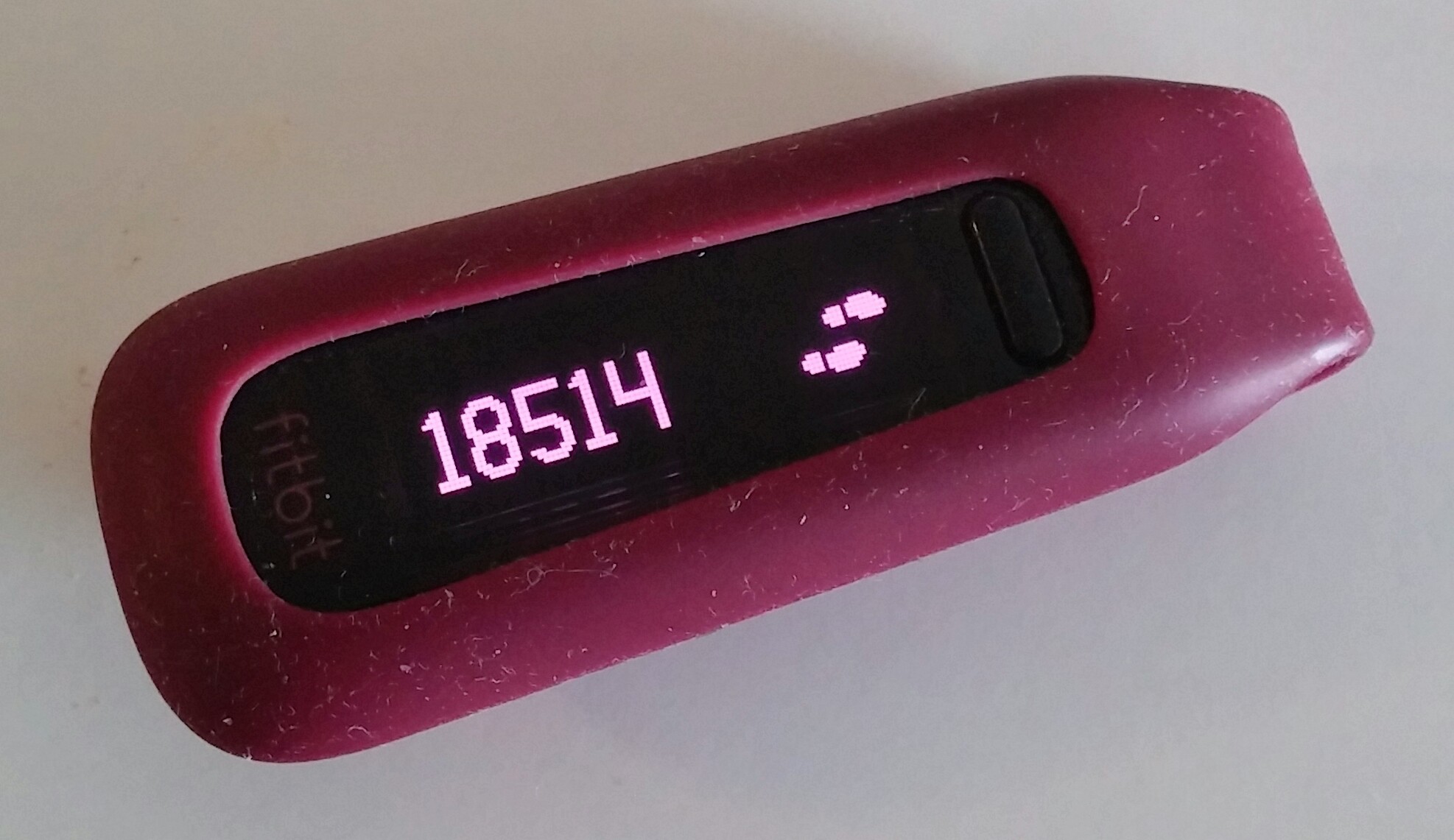
Because it’s freaking easy and it can be done anywhere. I wrote a post on walking a couple of weeks back–you should be able to find via search. Look at my beautiful and indispensable best friend, my FitBit One in the photo below. I’ve topped 18,500 steps today, and the day’s not over yet. That’s almost nine miles worth of steps. I work a full time job, have a wife and young son, and do all the cooking. Next time you think you don’t have time to exercise, think of this post and feel your legs begin to itch.

I credit 63% of my ripped-ted-ness to this little, beautiful device.

I credit 63% of my ripped-ted-ness to this little, beautiful device.

Master your hormones. Lift heavy.

Lifting very heavy barbells using compound movements in a fasted state is my holy grail of hormone control–more specifically, very naturally forcing my pituitary gland to pump lots of fat melting, muscle growth-signaling growth hormone into my bloodstream until the moment when I drive my blood sugar levels through the roof at the end of the day with lots of good food, spiking insulin and directing all those nutrients into my muscles and liver that had been depleted of glycogen from the prior 21 hours of fasting. I know I’m not explaining much here, but if you’re interested, lots more on this can be found on the pages of rippedforever.com.

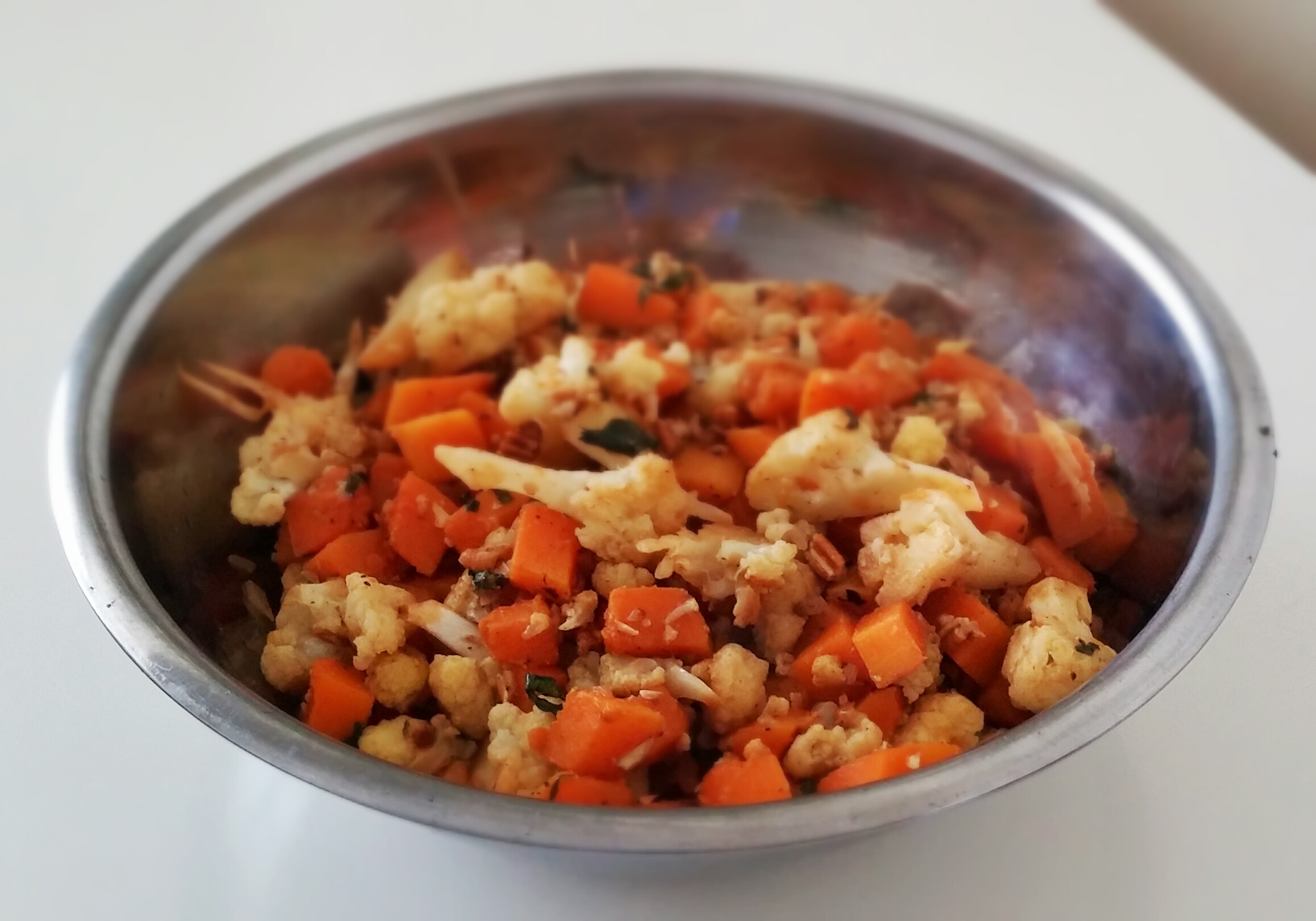
Ripped Recipe: Sauteed Butternut Squash and Cauliflower with Garlic, Mint, Lemon and Pecans

Butternut squash is awesome for sauteing.

Butternut squash is awesome for sauteing.

Ingredients

  • 1 butternut squash, peeled and diced into 1/2″ cubes
  • 1 head of cauliflower cut into florets
  • juice of 1/2 to 3/4 of a lemon
  • large handful mint leaves, chiffonaded
  • 1/2 to 3/4 cup pecans, coarse chopped
  • 3-4 large cloves garlic, minced
  • half cup or so unsalted chicken stock
  • 1 Tbsp EV olive oil or coconut oil or butter or lard or (more specifically) bacon fat. Each creates slightly different flavor profile.
  • salt and pepper to taste

Preparation

  1. Heat fat in large skillet. Add squash and saute for a few minutes until it takes on some color.
  2. Remove squash, add cauliflower and saute until it takes on a little color too.
  3. Remove cauliflower. Add pecans and toast lightly. Add garlic with a little extra oil and saute until just turning golden.
  4. Add squash back to pan with a little stock. Salt/ pepper, cover and steam for a couple of minutes. Then add cauliflower and a little more stock, salt/ pepper re-cover and continue to steam until everything is tender to your liking.
  5. Add mint and lemon juice, more salt/ pepper if necessary. Turn off heat, toss. Eat.

Hamstrings, Erectors: Can You Say Good Morning?

I’m feeling slightly creative.

I squat a lot. Other people? Not a lot.
A barbell on my back, legs on squeeze, I got em hot.
Back squat, front squat, rep it light or shake heavy
Forcing pressure through the core enough to break through a levee
Addicted much? I think so. Use a Smith crutch? Nah-ah, no.
Cause that’s like Double Dutchin for your knees in the snow.
Squats versus quads and glutes are sniper squads versus fruit
But aiming them at hamstrings is a lame way to shoot.

Ok, I’ll stop now. But my point is that while I think that front and back barbell squats are two of the most effective strength exercises hands-down, they don’t stress the hamstrings effectively. I’m sure some people might argue with that statement, as I would have until a couple of weeks ago. Why a couple of weeks ago? It was the first time I’d ever performed a heavy good morning. Until that time, I’d performed lots of good mornings over the years with a body bar or a broomstick, but I used them for stretching and warmups, not specifically to make strength gains. I decided to give heavy good mornings a try because I’d read in a few places that many power athletes favored them over Romanian and/ or stiff-legged deadlifts for hamstring engagement. And forget about traditional deadlifts; although I love them for more general posterior chain engagement, they don’t hit the hamstrings anywhere near the extent to which even Romanian and stiff-legged do. Needless to say that I was astonished by how obliterated my hamstrings were (in a good way) for three full days after performing a few sets of heavy good mornings for the first time. The fact that my hamstrings were in such distress after only three sets of ten reps at 110 lbs indicated to me that all my squatting had not been terribly effective at engaging my hams despite always squatting at least to parallel and generally with very good form.  So from here on my lifting routine will include heavy good mornings because it’s so clear how much I was depriving my hams the chance to reach their full potential without them. They’re also phenomenal for the erectors, glutes and internal and external obliques.

I’ve read conflicting opinions on the safety of heavy good mornings because they can generate high shearing forces across the spine, which can lead to a bulged disc. While this might be true, I don’t believe they are more or less dangerous than any other weight-bearing exercise. If performed with poor form and with a load beyond one’s reasonable capacity, any heavy lift can do serious damage. In the 17 years during which I have been lifting I have never seriously injured myself. I see absolutely no danger in performing heavy good mornings with good form and inside a power rack with safety pins set at a reasonable height to allow for a proper bailout if necessary. I should also note that I plan to continue to use good mornings as an assistance exercise a modality that favors a reduced load and higher rep range, so I don’t expect to ever have to bail on one.

Great video on why good mornings are so awesome and how to properly (safely) perform them:

My Favorite Packaged Foods For Getting Ripped

The majority of my diet is comprised of fresh food, but there are certain packaged foods I just have to have. This post’s title is misleading; there’s no packaged food that can make a person ripped or fat (in my opinion). There are, however, foods that address cravings and that are deeply satisfying. For me, that’s really important because it supports a healthy mind and makes staying ripped easy. Without further ado:

Red wine

Cliche, I know, but there’s nothing I enjoy drinking more than a Rioja or Petit Shiraz. I’m no wine snob, and am remotely far from being an expert, but I know when I like a wine and when I don’t.

Is this a single serve?

Is this a single serve?

100% dark chocolate

Yes, that’s 100%. I have some sort of animal attraction to jarringly bitter, earthy flavors. I usually have to go to the baking aisle of a higher-end grocery store to find the good stuff because the darkest bar I’ve ever found in the “normal” chocolate section is Guittard Nocturne, which is 91% and tastes like candy to me. I’ve found Dagoba 100% to be pretty good, but more on the acidic side. Scharffen Berger 99% (yeah, I’m not sure why they didn’t go the extra percent on that one) is also very nice with a little more cherry note to it, but less acidity than Dagoba. But my absolute favorite 100% bar that totally blows away everything else I’ve tried is SunSpire’s organic 100. I came upon it in the Whole Foods baking aisle (a place where I can’t do any real shopping because it’s just too stupidly expensive). It’s so perfectly balanced and smooth that I had to look back at the package the first time I tasted it because the qualities it possesses are so unusual in a 100% bar.

I am shocked and awed by this 100% dark SunSpire bar.

I am shocked and awed by this 100% dark SunSpire bar.

Here's a nice Rioja with 15 grams of Scharffen Berger 99% dark chocolate.

Here’s a nice Rioja with 15 grams of Scharffen Berger 99% dark chocolate.


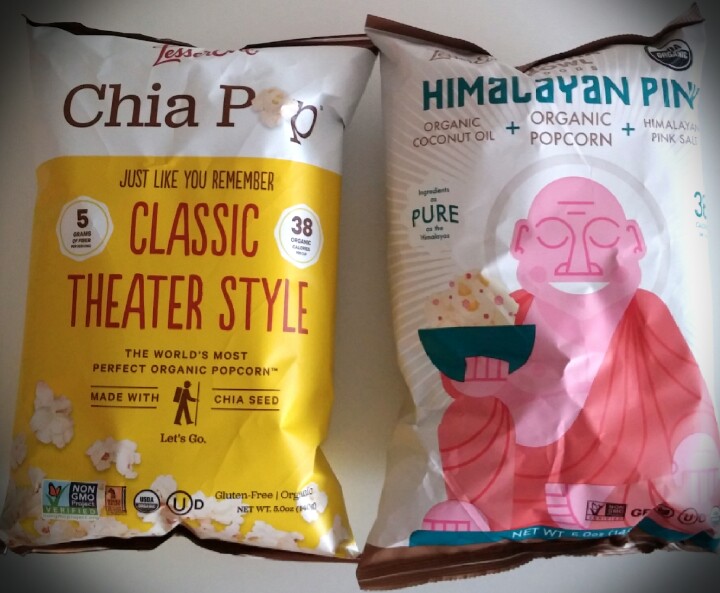
Lesser Evil ChiaPop Popcorn

I’m not suggesting that I find popcorn to be deeply satisfying, but it certainly has its moments for me. The best tasting and lowest calorie popcorn I’ve ever had is made by a company called Lesser Evil. They offer some fantastic flavors like coconut oil and Himalayan pink salt, movie theater butter, cracked black pepper and sea salt, and cheddar. I like to dump a few cups of this into my huge salad bowl after I’ve finished the salad and toss. It picks up some of the left over dressing, making it even more awesome.

Awesome for getting ripped.

Awesome for getting ripped.


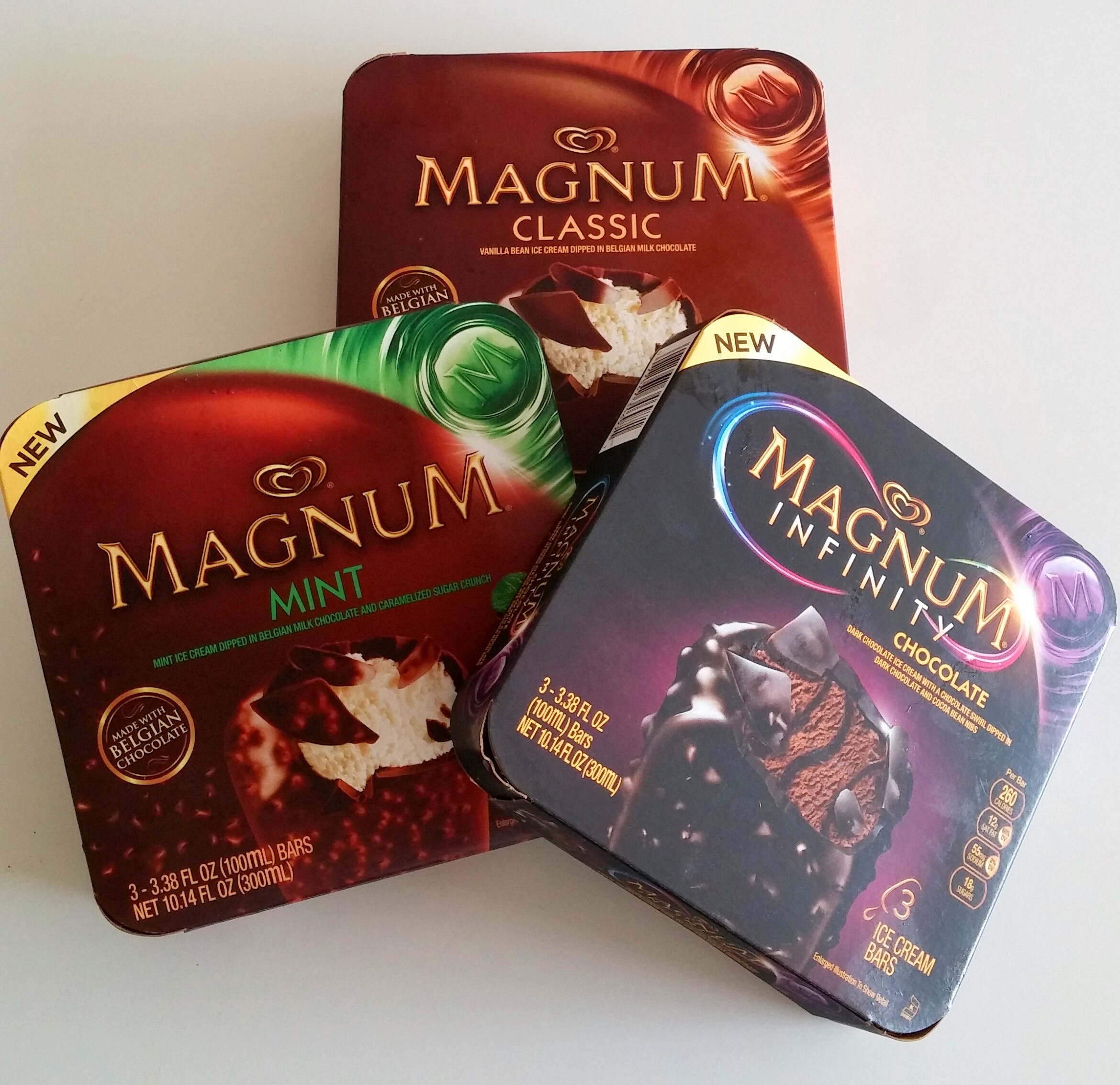
Magnum ice cream bars

There’s something to be said for artisanal, small batch, hand-crafted ice cream. And there’s also something to be said for Magnum ice cream bars that are mass-produced by the international conglomerate Unilever. They are SO freaking excellently great. My favorite is the Infinity Chocolate, which is dark chocolate ice cream with dark chocolate swirls covered in dark chocolate and sprinkled with dark chocolate covered cocoa nibs. But the classic (vanilla inside, dark chocolate out) and mint (mint inside, dark chocolate out sprinkled with dark chocolate covered caramelized sugar crunchies) are damn good too.

Magnum ice cream bars. 3 boxes = 1 serving (no).

Magnum ice cream bars. 3 boxes = 1 serving (no).

Covert Insulin Bombs, Lethal Vegetables, IFFYM and the Laziness of Clean Bulking

Calorie control is the name of the game; I had to understand this basic concept first to understand how to get ripped. It’s no secret that whole foods are typically less energy dense and more nutrient dense than processed foods. While the vast majority of my diet consists of unprocessed and lightly processed foods, there are several considerations I have to account for since I spend most of my day fasting, like not just eating the least calorie dense foods. I ate and still eat plenty of vegetables daily, but I do it strategically (see lethal vegetables below).

The secret insulin bomb

Here’s something interesting: I noticed some time ago that if I ate lean protein (like the breasts of flying animals) by itself, it made me feel the same way a straight bowl of plain rice would an hour later–i.e. pretty hungry and maybe a little lethargic. I did some web searching because I thought that was weird; I’d always been told that protein doesn’t stimulate much of an insulin response. It turns out that protein does indeed create an insulin spike, which is closely correlated with the protein source. Accordingly, different protein sources are associated with stimulating different hunger responses (http://www.ncbi.nlm.nih.gov/pubmed/20456814). Although it might not be so relevant when fasting for 21 hours per day since insulin goes through the roof during the feeding window and it really doesn’t matter, it will be relevant when I switch back to fasting for a shorter period during a more pronounced strength and size development cycle. A longer feeding period = more time to overeat, even when “bulking” (which I have strong feelings about–see below). So insulin control becomes more relevant during this time. To buffer the insulinogenic effects of protein, I’d try to consume some fat with it (that is if I’m not eating a lot of vegetables with the protein) in an effort to smooth out the insulin response. I’ve found that consuming fattier meat like like higher fat cuts of beef or lamb or [prohibitively expensive wild] salmon assists with that. And in complete disregard for the Primal/ Paleo philosophy that practitioners need not monitor their calories because energy balance will take care of itself, I’d still watch them. In my opinion, that’s a dangerous practice.

The lethal combination of fasting and vegetables

Blogs are all about the hype, so the above heading is clearly necessary. Fasting + vegetables = death? No, not really, but fasting + vegetables could = trouble maintaining muscle mass. As I’ve increased my daily intermittent fasting window from 16 to 18 to the current 21 hours (9pm-6pm), my feeding window has contracted [very obviously] to just three hours. This is relevant for a couple of reasons that can work together against muscle and strength development. The first is stomach shrinkage; my stomach capacity has absolutely decreased since I began fasting more than four months ago, and especially since bumping up to 21 hours. The second is the space vegetables occupy in that smaller stomach. Although very nutritious, low-calorie and voluminous vegetables like lettuces, cabbage, broccoli, etc., take up precious space and digestion time, making it tougher to consume all the calories I need to maintain strength and muscle mass. One simple solution is to increase the feeding window. The other is to increase intake of calorie dense whole foods, like rice, potatoes and butter, oats and casein, cheese and sunflower butter or a serving of ice cream and a denser vegetable, like squash or sweet potato.

My experience with IFFYM (If It Fits Your Macros)

I mention a few times throughout this blog that I’m not a big fan of the “If It Fits Your Macros” (IFFYM) style of eating for a couple of reasons. If you’re not familiar, IFFYM permits an individual to eat literally anything he or she desires as long as macronutrient/ caloric targets are not exceeded (a macronutrient target is by definition a caloric target–request more explanation in comments if interested). I’ve certainly read about individuals who have gotten ripped eating whatever quality of food they choose, like donuts, fried chicken and pizza. Although I haven’t ever fully immersed myself in IFFYM, I experimented for a time with being more lenient about food choices, eating chips, pizza, mac and cheese, stuff covered in chocolate, more ice cream than normal, etc. While eating this way was extra fun, I found it to be counterproductive to my goals for a couple of reasons.

  1. I retained noticeably more water eating this way. I don’t know exactly why, but I have a feeling that the increase in sugar more than salt had something to do with it.
  2. My sleep quality was reduced. Perhaps something to do with elevated insulin levels or other hormone imbalances, but I won’t speculate beyond that.
  3. I was much hungrier more of the time. Granted, I had not begun fasting intermittently until later, so some of the hunger could likely have been attributed to blood sugar fluctuations that were the result of eating anything. But I’m almost certain that the hunger was closely linked to the poorer quality of the food I was eating. Specifically, my diet included more sugar and processed carbohydrates, which both elicit a significant insulin response (except for fructose, but that’s a whole other beast–request explanation in comments if interested).

I also think IFFYM exposes an individual to more unnatural chemicals and substances that are used to stabilize, preserve and flavor processed foods.

The Laziness of Clean Bulking

I’m doing my level best not to speak disparagingly of others across this blog. But if there’s one thing I can’t stand, it’s to read comments on forums left by people who say they are “clean bulking.” What they really mean (usually) is that they’re getting fat eating oatmeal, potatoes and milk. For me, it’s not only completely lazy, but it’s counterproductive as well. Why the heck would a person who isn’t a competitive bodybuilder want to be fat, bloated and slow for a good portion of the year, and then ripped for a few months? Sure, it could definitely be fun to overeat for most of the year, but I other thoughts about that. Fat is fat. It’s not like, “Oh, my left love handle is the bad one. It came from triglycerides that were the end product of Yodel and potato chip metabolism, but my right one, well, that’s the good one. That one is made of triglycerides from rice and seaweed.” Being fat is not healthy, and that’s not my opinion. I’m not suggesting that I think everyone should be at 6% or 8% or even 10% body fat, no. I’m talking about guys (mainly) getting up to 20% and 25% fat when “bulking”. The negative hormonal and metabolic effects of that level of fat are palpable, but especially so when swinging weight so hard from one season to the next. I think the idea of a “clean bulk” is used as an excuse for overeating with the belief that it’s necessary to build muscle and strength. Overeating is never necessary for building strength. Proper eating is. Eating just the right amount is. Understanding what the right amount of eating is for one’s own body and lifting regimen requires some time and work that I think the “clean bulker” either doesn’t want to put in, or might not know how to put in. Clean bulking might be healthier than IFFYM (or dirty bulking) because “clean” foods contain fewer chemicals and sweeteners, but fat is fat. Fat is fat.

Is Calculating LeanGains Macros and Calories Irrelevant?

I used LeanGains to develop and maintain this condition... but I also didn't.

I used LeanGains to develop and maintain this condition… but I also didn’t.

I owe a good deal of my success in learning how to get ripped to Martin Berkhan, founder of the LeanGains intermittent fasting protocol. When I began to understand that intermittent fasting was conducive to both caloric control and muscle maintenance and/ or gain, I really began to understand how to get ripped. But reflecting on my experience with LeanGains recently, I realized that I had actually been following relatively few of the program’s guidelines, yet I still got ripped, and I still put on muscle. Naturally, I began to wonder how relevant those guidelines were. Since I’m interested in determining how little effort is really required to get ripped and determining what’s best for me, I decided to pull LeanGains apart and examine the pieces.

The Big Five

  1. I see lots of inquiries online about how to calculate daily LeanGains macros. If you were to ask me how, I’d tell you that I’m really not sure because I never did it… yet I still got ripped using LeanGains.
  2. I also see lots of discussion about how to get ripped by employing LeanGains’ caloric cycling rules of 20% above maintenance on lifting days and 20% below maintenance on non-lifting days. I definitely couldn’t provide much information on the subject because, again, I never did it, yet I still managed to get ripped using LeanGains.
  3. Then there’s the issue of using BCAAs every two hours after a lifting session when fasted until the eating window opens. I frequently either forgot to take them, was too busy to take them, or purposely didn’t take them… yet I still got ripped fasting daily for 21 hours per day.
  4. Of course,  to the above point, I just naturally stopped following the 16/8 fast/ feed guideline a few weeks after beginning LeanGains in favor of 21 hours fasted… and yes, I still got ripped using LeanGains.
  5. Then there’s the reverse pyramid style training program that Martin Berkhan himself uses, or did at some point. It seems like a good program, but I never used it exclusively and I still got ripped following LeanGains.

These realizations led me to the conclusion that I was having a delusion that I was following LeanGains, when I really wasn’t. But I still got ripped. Placebo? No.

How to calculate LeanGains macros? The question might be irrelevant.

I’m gonna come right out and say it: macro cycling played no role in me getting ripped. If it had, I don’t think I would have been able to drop from 13% body fat to 7% (9 lbs of fat) with only a 2 lb net weight loss. That means I gained 7 lbs of muscle at the same time.* I paid exceedingly little attention to my carb to fat ratio. When I look back at my MyFitnessPal logs (which automatically tracks macros) I see that there was no pattern to my fat/ carb intake. I sometimes ate high fat on lifting days and high carb on non-lifting days. Sometimes it was reversed. Sometimes I only ate 120g carbs, sometimes 250g. Sometimes I forgot to eat carbs, as in “40-grams- for-the-day-from-broccoli-and-kabocha-squash” forgetting to eat carbs. After conducting a bit of a deeper dive into my nutrient data, I discovered that my three-day carb average was usually in the low 200g range. From that fact alone, I’d have to conclude that averaging 200g per day over three days is adequate for me and enables optimal lifting performance. That said, I always maintained consistent protein intake of 130-150g/ day. I’m not suggesting that macro manipulation is wrong–it’s just not right for me.

*In the spirit of full disclosure, I had dropped heavy lifting in favor of total engagement in a [stupid] metabolic conditioning program [that ate my strength and muscles for a snack] for the eight months before I began fasting intermittently. This possibly primed my body to respond more rapidly when I began lifting heavy again. As an aside, something else I don’t understand about macro cycling under LeanGains is that carbs are to be consumed on lifting days, after lifting. But from that time until after the next lifting session (48 hours), carb intake is to be reduced significantly. It makes more sense to me that carbs are increased on the rest day evening so that the muscles are primed with glycogen for the following day’s lifting session.

I said nah-ah to cycling daily caloric intake.

LeanGains suggests that its practitioners swing caloric intake hard from day to day based on lifting vs non-lifting days. The recommendation is +20% on a lifting day, and -20% on a rest day. On a 2,500 calorie diet, that’s a 1,000 calorie swing multiple times per week. I found that it actually became complicated and felt very unnatural to consume so many calories on a lifting day. This stands in paradoxical contrast to how natural fasting for 90% of the day feels to me now. The rationale behind the guideline is that the body requires all that extra energy to build muscle. But in my experience, like macro cycling, it just doesn’t matter. I maintained a daily calorie deficit of 300-600 calories whether lifting or not. This can only mean that for me, protein synthesis is relying to some extent on fat stores for fuel. This would make sense since we know that fat stores provide a buffer for energy imbalances (i.e. deficits), although I’d imagine that a body fat threshold exists below which muscle catabolism becomes more efficient than fat catabolism. Whatever the case, the takeaway from this I believe, is that there’s flexibility in any program. This is certainly not a knock on LeanGains or its creator. But if I hadn’t experimented and listened to some things my body (and brain) was telling me, I might not have been as successful in achieving my goals. That’s what learning how to get ripped was all about for me.

The little jury in my brain is still partially out on BCAAs

I admit, my statement about BCAAs at the top of this post might have been a touch hyperbolic. I do take BCAAs, but not like I used to. When I began fasting intermittently, I gulped them down according to Martin Berkhan’s recommendations of before, during and after lifting, and every two hours until feeding time. But after a while, I began to get lazy about the two-hour rule to the point where I didn’t have any between 8am and, say, 2 or 3pm at which time I’d have my first meal (that’s since changed to 5 or 6pm). I pretty much failed at adhering to that guideline and I still got ripped. Now it’s true that I might have hindered my gains [picture the Hodge Twins saying that], but it just goes to show that there’s no hard and fast line that defines the boundaries of how to get ripped. I do, however, believe that BCAAs have played a critical role in my lifting performance. On two occasions I tried lifting under truly fasted conditions without anything in me but water. In a word: disastrous. In two words: utter failure. My guess is that BCAAs are so acutely effective for my lifting sessions because they provide energy in the form of calories, which I think is separate from other anabolic qualities they possess. I’ve estimated that one scoop of the BCAA supplement I use (Modern BCAA +) contains 30 calories*, so a couple of scoops before and during lifting provides around 60 calories, which provides an energy boost, albeit modest.

*Unlike the case for foods, the U.S. FDA only provides nonbinding supplement labeling recommendations (you can read all about the boring details here) . More specifically, supplement manufacturers are not required to list caloric content anywhere on the product label. Nevertheless, BCAAs are building blocks of proteins, and do contain approximately the same number of calories per gram. Keep in mind that although a 7g scoop of pure BCAAs might contain ~28 calories (7 x 4), it might contain more or less depending on the extent to which other ingredients are present in the supplement (e.g. electrolytes, artificial sweeteners, etc.).

Eating doesn’t matter. I don’t ever eat.

Of course that’s not true, but it sometimes feels like it. While LeanGains programs for a 16 hour fasting window, on many days of the week I easily go 21 hours without eating, which a year ago I would have said is preposterous, foolhardy, pointless, difficult and just plain backward. My fasting pattern just naturally evolved from the initial 16 hours; I wasn’t intentionally trying to extend it. My point is (again) that based on my experience, the processes and practices for getting ripped are flexible and customizable to an individual’s preferences and needs.

There are lots of ways to lift.

LeanGains’ founder is fond of the reverse pyramid lifting method, which, in my opinion, is an awesome technique that I use as a component of my own strength program (you can learn about the details of the RF Strength Program here). But because I or someone else thinks it’s great and has had success using it doesn’t mean it’s right for everyone. I’m not suggesting in any way that LeanGains is claiming that it is; I’m just making the point that modalities for getting ripped are multifarious. The most effective eating style, supplement stack (if you’re into that) and lifting routine is one that is crafted by the individual to his or her unique predilections and requirements (as long as basic core principles are accounted for).

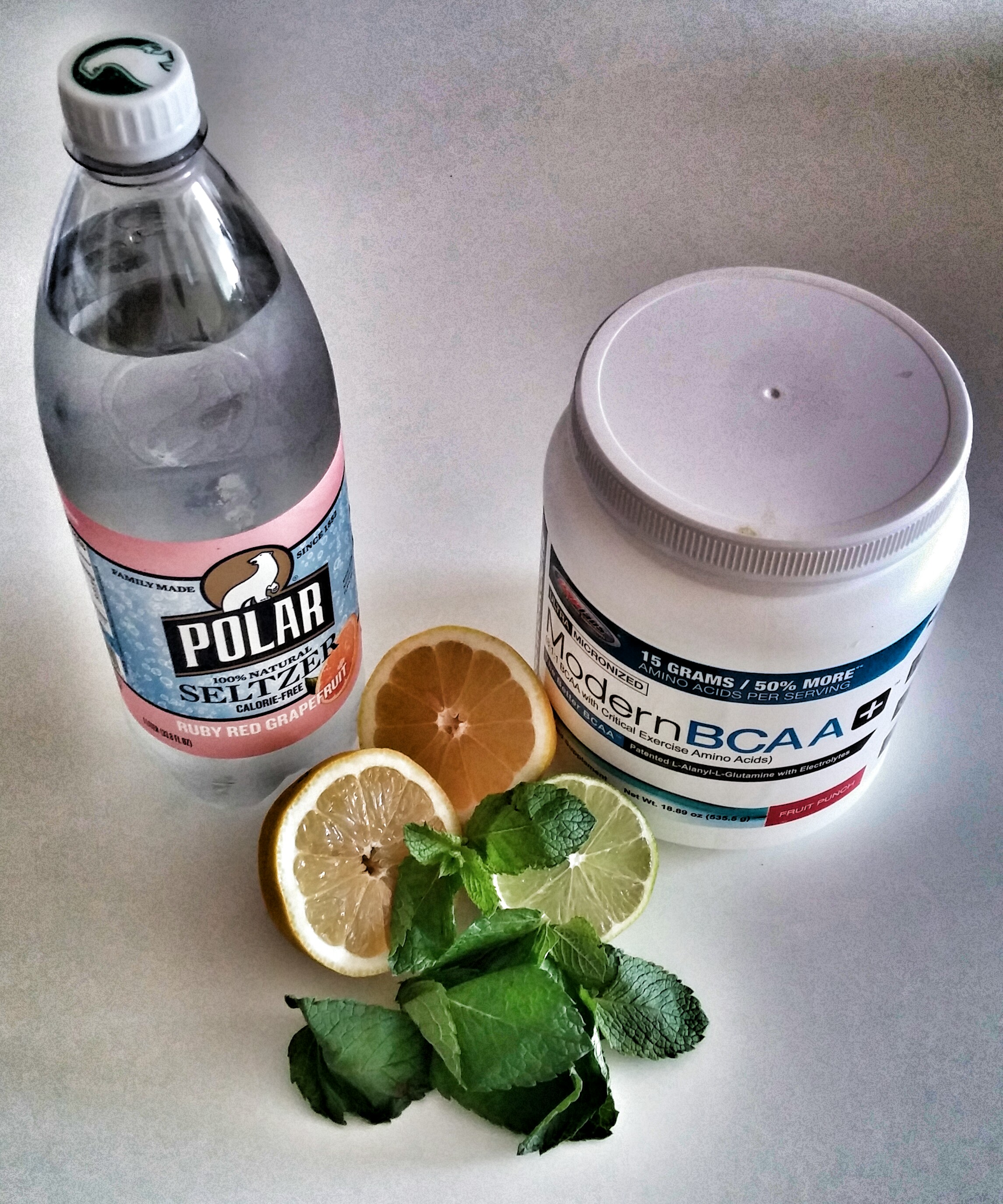
Ripped Recipe: Watermelon or Fruit Punch BCAA Citrus-Mintade Ginger Fizz

A few fresh ingredients take BCAAs in a new direction.

A few fresh ingredients take BCAAs in a new direction.

This recipe is a departure from my standard of not including chemicals in my food; it’s a necessary evil though. Because I fast for what’s recently turned into 21 hours per day, I require some form of nutrition that favors maintainance of an anabolic state while remaining as close to fasted as possible. For this reason, I take BCAAs (branch chain amino acids). They’re completely synthetic and contain artificial flavors and Sucralose. I take anywhere from zero to 30 grams per day. Because they’re unnatural and expensive, I wouldn’t recommend BCAAs to anyone unless they’re lifting heavy in a fasted state and want to maintain a near-fast for several hours after lifting. They’re totally unnecessary otherwise. I’ve already written more than I like to for a recipe post.

Now doesn't this look refreshing? Non-fasters might enjoy as well.

Now doesn’t this look refreshing? Non-fasters might enjoy as well.

Ingredients
1-2 scoops watermelon or fruit punch BCAA powder (I prefer Modern BCAA +)
juice of 1/2 lemon
juice of 1/2 lime
flavored seltzer of your choice (I prefer Polar brand)
several leaves fresh mint
1-2 thin slices of fresh ginger

Preparation
Add lemon juice, lime juice, mint leaves, and ginger to small vessel and muddle well with the back of a spoon. More muddled = more fresh flavor.

Add BCAA powder to 1-2 oz water in bottle or shaker and shake hard until dissolved.

Combine citrus-mint-ginger solution with BCAA solution over ice in large glass, add flavored seltzer to desired dilution and stir gently.

How to Get Ripped, Section 2.1: The Zen of Intermittent Fasting

I dropped breakfast and pushed lunch to late in the afternoon.

Before becoming ripped this time around, I used to eat breakfast. As a NASM Certified Personal Trainer (I used to train people as a hobby), I told my clients that they should eat breakfast. Why did I do that? For one, “everyone” on TV, the internet and in the business said you’re supposed to, and for two, it seemed to make sense. How else would you have energy to exercise? You’d certainly waste away without breakfast. Needless to say, I’ve discovered through my own experience that this just isn’t true. It was a pretty significant moment of realization for me. I frequently eat my first meal of the day around 2:30 or 3pm, which concludes an 18 hour fasting period.

Martin Berhkan is the father of an eating protocol (many consider it a lifestyle) called 16/8 intermittent fasting a.k.a “LeanGains“. Some people reading this might already be familiar with it. The core principle is that you don’t eat for a period of 16 hours straight, after which you can eat within an 8 hour window. I’ve adjusted it to my own preference of typically 21 hours fasting, three feeding during the week and around 18 fasting, six feeding during the weekend.

There are several styles of intermittent fasts with each specifying a different fast length and frequency. Examples include the Warrior Diet and Eat Stop Eat, the details of which aren’t relevant to this post, but they’re all the same in principle: don’t eat for a certain period of time, then eat within a specified time window.

Many individuals have found LeanGains to be exceptionally effective for maintaining both leanness and an internal environment conducive to protein synthesis (i.e. muscle development). Berhkan cites multiple studies that explain why intermittent fasting is so effective. The main concepts include the following:

  • Little to no circulating insulin during the fast promotes a flush of human growth hormone, especially after heavy lifting. This provides an ideal stimulus for muscle growth. Additionally, growth hormone is a potent fat burning and muscle sparing agent.
  • Fasting promotes muscle glycogen depletion to the extent that the muscle will be apt to rapidly “soak up” nutrients once reintroduced when the fast concludes.

As an aside, Bojan Kostevski of lift-heavy.com recently released some very interesting research on intermittent fasting and its effects on human health. You can find it here.

Stop eating to reduce hunger… WTF?

I’ve read numerous studies on this subject, some cited by Berkan, others that I found on my own. The evidence is clear that contrary to conventional wisdom, muscle loss is not an issue when fasting for short periods like this (even 21 hours is considered to be a short period). But in the end, I have a basic theory (that I mentioned in an earlier post) about why intermittent fasting can be so effective: it is a tool that enhances control over caloric intake. Because insulin levels are minimized during the fast since glucose isn’t present in the bloodstream, blood sugar undulations are nearly nonexistent and hunger is suppressed to a great degree. I wouldn’t have believed it if I hadn’t done it myself, but it absolutely worked for me. Less hunger = better compliance with caloric restriction goals. I’d even venture to say that for me, fasting has made appetite control as close to effortless as possible. All in all, I tend to think it’s a little less scientific than some proponents make it out to be, but that’s just my opinion. I’ll stress again that I chose intermittent fasting because it integrates well with my lifestyle and I enjoy it for several reasons. I love not having to spend time preparing food and eating in the morning, and I also prefer pushing my first meal as far into the afternoon as possible because when I’m at work I can’t really enjoy what I’m eating. This is why I like to eat the majority of my calories at home in the late afternoon and evening.

But there’s also something almost spiritual about fasting for me. Somewhere between 14 and 16 hours in, I usually begin to experience a mild euphoria and my ability to concentrate goes through the roof. I’d read many accounts of this phenomenon and can say from my own experience that it’s real. Additionally, not having to think about food for hours of the day is truly freeing. Before I began fasting, I felt like I was hungry all the time at work, thinking about what I should eat next. Insulin circulating through my body kept me hungry, and the small snacks I ate were never ever completely satisfying; they just kept me hungry. Having a maximum of only a six-hour feeding window now means that when I eat it can be a lot of food and very satisfying, and that’s good for my soul.

Coming off the fast

I typically prefer to come off my fast (especially a 21-hour weekday fast) with decaf coffee (decaffeinated via water or CO2 method only) and a quarter cup or so of whole milk. I don’t like to jam a bunch of food down my gullet straight away. This is completely a personal preference.

All this said, I don’t believe that fasting is a requirement for getting ripped, since I’m pretty sure that old school guys like Ed Holovchik, Steve Reeves, Jack LaLane, Lou Ferrigno, and early Arnold Schwarzenegger didn’t get ripped fasting–they lifted heavy using strength programs designed for progressive overload, controlled their calories and rested. But fasting is great for me, and I don’t think I will ever stop fasting intermittently since I find it so crucial to effortlessly staying ripped.

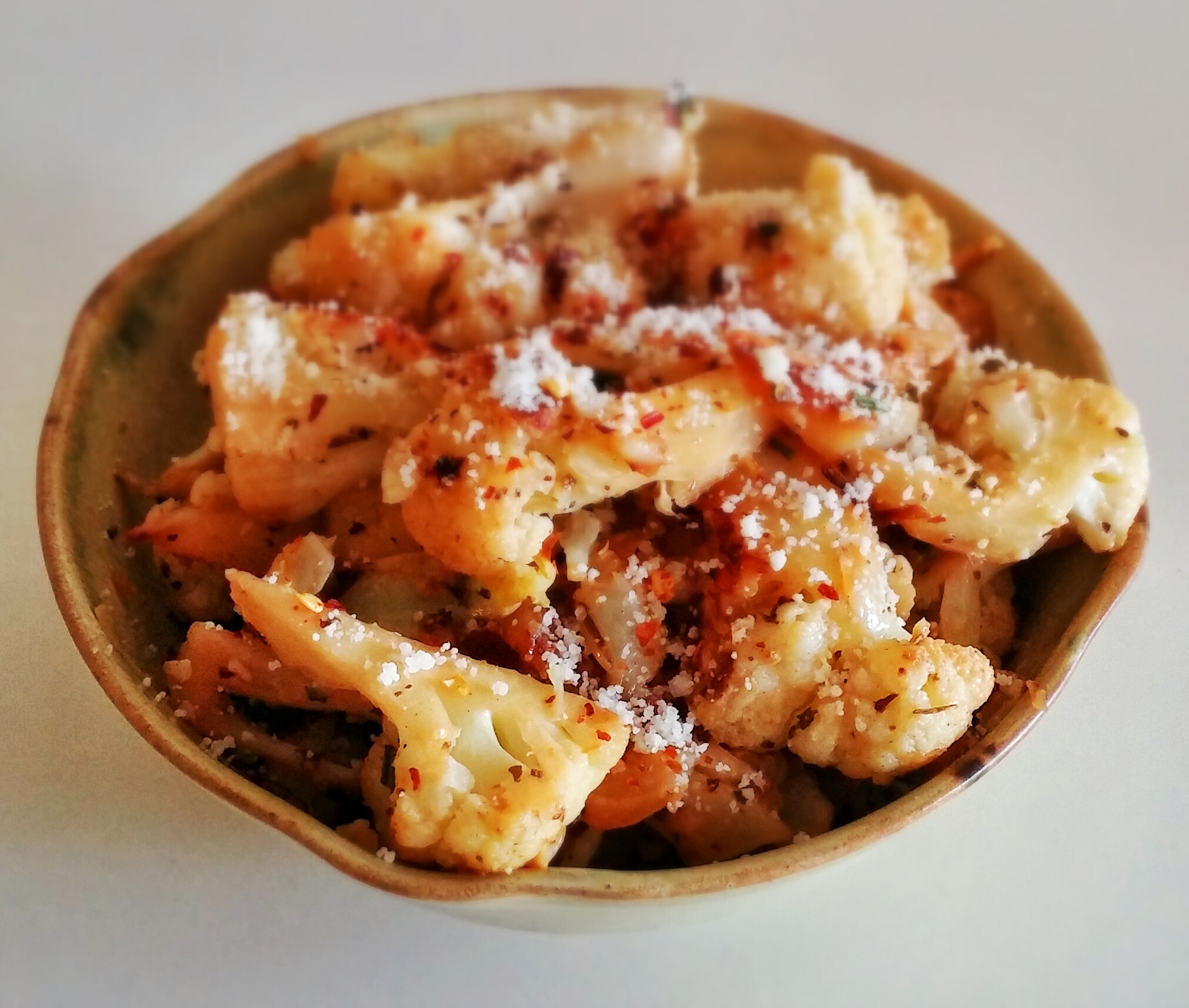
Ripped Recipe: Caramelized Cauliflower in Lemon-Garlic Brown Butter with Rosemary and Pecorino

Enough said.

Enough said.

No further description warranted.

Ingredients
900g cauliflower cut into florets (1 large head)
1 Tbsp butter (I prefer organic cultured butter)
1 Tbsp bacon fat (or another of butter)
juice of 3/4 to 1 lemon
3 large cloves garlic, sliced very thin
2 Tbsp chopped fresh rosemary
1 tsp dried sweet basil
1/4 cup + a little grated pecorino romano
1/2 tsp red pepper flakes
kosher salt and black pepper to taste

Preparation

  1. Heat 1 Tbsp butter in large pan and cook until just golden brown.
  2. Turn flame to high. Add cauliflower and allow to brown, stirring occasionally. Salt and pepper to taste. Remove from pan once soft enough for your liking.
  3. Add bacon fat or other Tbsp butter to pan. [Bacon fat tastes much better to me. And it’s just as good for you as butter. Do some googling if you don’t believe.] Heat it up. Add garlic, rosemary and basil and sauté until garlic slices just begin to take on a light brown hue. Add red pepper flakes and cook for an additional 20-30 seconds.
  4. Add lemon juice immediately followed by cauliflower and cheese. Mix well and remove from heat. Spoon into bowls and top with a little grated cheese and more red pepper. Eat.